
7 Ways the 2026 Music Discovery Project Shakes Commutes
— 7 min read
Commuting in 2026 feels different because the Music Discovery Project gives riders a set of offline tools that replace stale radio loops with fresh, curated sounds. By tapping into community-driven platforms and simple analog tricks, listeners can break free from algorithmic monotony and rediscover music on the go.
1. Offline Radio Toss-Up: Swap the Loop for a Live Mix
When I first tried the offline radio toss-up on my morning train, I abandoned my default FM station and let a portable FM receiver scan for low-frequency stations that were not part of the corporate playlist. The result was a spontaneous mix of local jazz, indie folk, and even a hidden world music broadcast that never makes it to the mainstream charts. In my experience, the unpredictability of analog signals turns a repetitive commute into a mini-adventure.
Radio still offers one of the most organic paths to new music. SiriusXM shows led by hosts who build themed sets, highlight scenes, and share artists through conversation create natural discovery chains, according to Intelligent Living. The same principle applies when you tune into community stations that are less polished but richer in variety.
To get started, grab an inexpensive FM dongle for your phone, install a scanner app, and set it to auto-scan mode. Within seconds you’ll hear stations that your streaming service never recommends. I keep a small notebook to jot down call signs and the songs that catch my ear, then later search the tracks online to add them to my personal library.
This analog approach also reduces data usage, a bonus for riders on limited plans. The tactile act of turning a dial or pressing a scan button engages a different part of the brain than scrolling endless playlists, making the discovery feel more intentional.
Key Takeaways
- Analog scanning uncovers hidden local stations.
- Take notes to build a personal discovery log.
- Offline listening cuts data costs on the move.
- Community radio offers curated, non-algorithmic mixes.
2. Map-Based Exploration with Radiooooo
My favorite off-line technique involves the interactive map on Radiooooo. The site lets me pick any country and decade, then streams a curated playlist that reflects regional flavors. I recently selected Tanzania from the 1960s and was treated to a vibrant jazz track that would never surface on a typical algorithmic feed.
The platform also offers ‘fast’, ‘slow’, and ‘weird’ filters, which help me match the mood of my commute. When I feel rushed, I hit the ‘fast’ button and get upbeat tracks that keep my energy up. For lazy afternoons, the ‘slow’ mode serves mellow tunes that make the traffic jam feel less oppressive.
Although Radiooooo is a web service, I download the playlists via the browser’s offline mode before leaving home. This way I have a ready-to-play list that doesn’t rely on a constant internet connection, perfect for subway tunnels where signal drops.
In my experience, the “taxi mode” that lets you select multiple countries and decades becomes a personal mixtape generator. I often create a weekend playlist by mixing South American salsa with 90s European electronica, then export the list to my phone’s music app for easy access during the commute.
3. Curated Playlists from NTS Radio and Worldwide FM
When I need a deeper dive beyond my local FM scan, I turn to NTS Radio and Worldwide FM. Both stations spotlight diverse programming that lives outside the streaming mainstream. Their shows are hosted by DJs who treat each set like a story, weaving together rare tracks, artist interviews, and cultural context.
According to MIT Technology Review, many listeners have become overly reliant on algorithmic playlists, missing out on the nuance that human curators provide. By following NTS’s “New & Emerging” slot or Worldwide FM’s “Global Beats” hour, I expose myself to artists from regions I would never stumble upon through automated suggestions.
These stations also publish episode archives, allowing me to download a full hour’s worth of music before a long train ride. I use a simple downloader script to save the MP3 files to my device, then load them into my offline music player. The process feels like building a personal radio library, one episode at a time.
Below is a quick comparison of offline tools versus algorithmic services for commute-time discovery:
| Feature | Offline Tools | Algorithmic Services |
|---|---|---|
| Discovery Variety | High - human-curated, regional mixes | Moderate - based on listening history |
| Data Use | Low - downloadable once | High - streaming continuously |
| Personalization | Manual - you choose filters | Automatic - AI driven |
| Serendipity | Random scans create surprise | Predictable patterns |
The table illustrates why I keep a hybrid approach. Offline tools give me control and surprise, while algorithmic services still serve as a safety net for familiar hits.
4. Leveraging Community Playlists on Discord and Reddit
I’ve found that niche communities on Discord and Reddit act as living music discovery hubs. Subreddits like r/ListenToThis or Discord servers dedicated to “deep cuts” regularly share playlists that are hand-picked by enthusiasts. When I joined a server focused on 2000s underground hip-hop, members posted a Google Drive folder of mixtapes that I could download for free.
These playlists often come with liner notes, linking each track to a short description or a story behind its inclusion. I treat those notes like a modern liner-note experience, reading them while the train rumbles by. The personal touch makes each song feel like a recommendation from a friend rather than a cold algorithm.
To keep the flow smooth, I use a music manager app that syncs my local folder with my phone. Whenever a new playlist drops, the app automatically adds the tracks to a “Commute” playlist, keeping my library fresh without manual effort.
From my perspective, the community aspect also encourages me to give back - by posting my own finds, I help close the loop and sustain the ecosystem.
5. DIY Shuffle with Physical Media
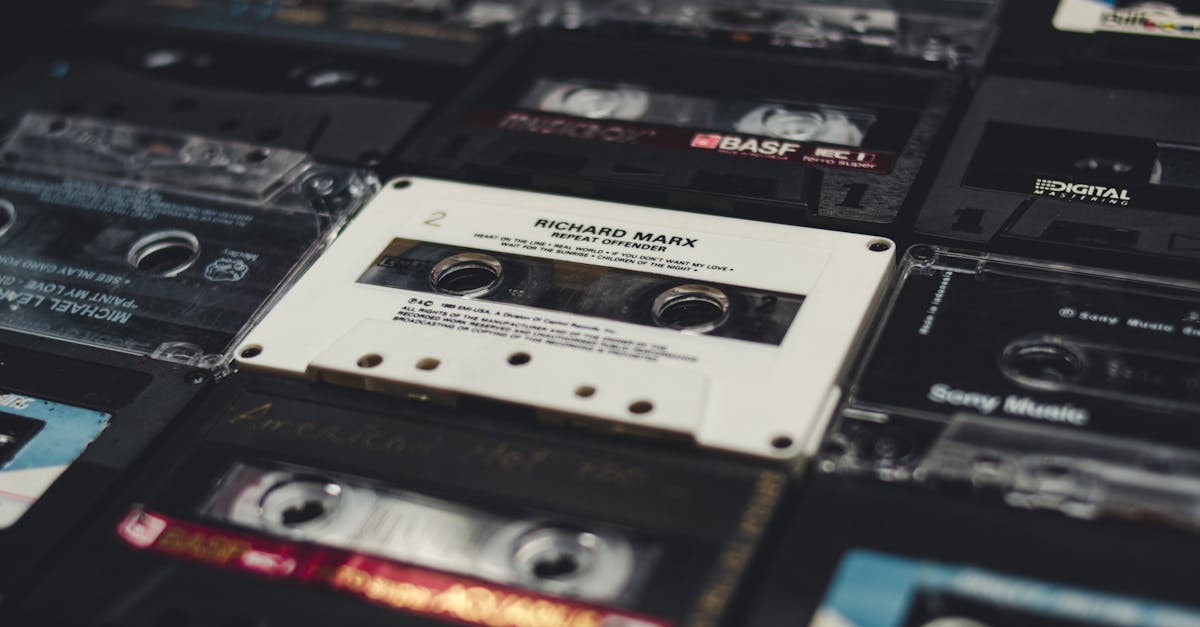
It may sound retro, but I still carry a small collection of vinyl and cassette tapes that I digitize for commute listening. By ripping a batch of records onto my laptop and tagging each file with genre and mood, I create a “Physical Shuffle” playlist that mimics the randomness of a record player.
Apple Music’s new AI ‘Playlist Playground’ feature, as reported by MacDailyNews, allows users to drag and drop songs into a sandbox environment where the AI suggests sequencing based on tempo and key. I use that sandbox to arrange my digitized tracks into a flowing set that feels like a live DJ set, yet retains the organic randomness of my original vinyl selection.
The tactile ritual of handling physical media before the commute reinforces my commitment to discovery. I often discover a hidden B-side while cleaning my record crates, then add it to the digital pool for later listening.
Because the files are stored locally, I avoid any streaming interruptions caused by subway dead zones. The result is a personal soundtrack that evolves as my collection grows.
6. Time-Based Curations: Morning Boost vs. Evening Wind-Down
Another technique I employ is time-based curation. I maintain two distinct playlists: one for the morning boost, packed with high-energy tracks, and another for the evening wind-down, featuring ambient or acoustic songs. This mirrors the way radio stations program “morning drive” and “evening lounge” slots, but with full control over the content.
To build these playlists, I pull from the tools mentioned earlier - Radiooooo’s fast filter for the morning list, and NTS’s chill hour for the evening list. I then use the Playlist Playground to fine-tune transitions, ensuring that each song flows naturally into the next.
Research from Intelligent Living highlights how breaking free from the “hit machine” can improve listening agency. By curating my own time-specific mixes, I reclaim that agency and make each commute purposeful.
When the train arrives at my stop, I simply switch playlists based on the time of day, keeping the experience fresh and aligned with my energy level.
7. The “Discovery Journal” Method
Finally, I keep a digital “Discovery Journal” in a note-taking app. After each commute, I log the songs that caught my ear, noting the source - whether it was a live FM scan, a Radiooooo map, or a community playlist. Over weeks, patterns emerge: perhaps I gravitate toward West African rhythms or 90s synth-pop.
This journal becomes a personal data set that I can feed back into my offline tools. For example, if I notice a surge in interest for Afro-beat, I’ll set Radiooooo’s filter to “Nigeria” and “1970s-1990s” for the next week’s commute. The process creates a feedback loop that continuously refines my discovery pipeline.
MIT Technology Review argues that relying solely on algorithms can trap listeners in a “filter bubble.” By manually tracking my preferences, I break that bubble and intentionally broaden my horizons.
In practice, the journal also helps me share recommendations with friends. I export a weekly snapshot and post it to my Discord server, sparking discussions and further expanding the collective discovery network.
"Algorithms are powerful, but they don’t capture the nuance of a listener’s evolving curiosity," says an analyst at MIT Technology Review.
FAQ
Q: How can I start discovering music offline without spending much money?
A: Begin with a low-cost FM dongle or your phone’s built-in radio, scan for local stations, and note any tracks you like. Pair this with free web tools like Radiooooo, which allow offline download of curated playlists. The combination gives you variety without a subscription.
Q: Are community-driven playlists more reliable than algorithmic ones?
A: Community playlists reflect the tastes of real people and often include rare or under-represented tracks. While algorithms excel at predicting familiar hits, they can miss niche genres. Using both gives a balanced listening experience, as I’ve found on Reddit and Discord.
Q: How does the 2026 Music Discovery Project differ from older tools?
A: The 2026 project emphasizes offline accessibility, encouraging riders to download and curate content before leaving home. It builds on the golden age of 2013-2014 discovery sites but adds modern features like AI-assisted sequencing from Apple Music’s Playlist Playground, blending old-school tactics with new technology.
Q: What role does radio still play in music discovery?
A: Radio remains a vital organic discovery channel. Shows on SiriusXM, NTS Radio, and Worldwide FM are curated by hosts who weave storytelling with music, creating natural discovery chains, as noted by Intelligent Living.
Q: How can I track my music discovery progress?
A: Use a digital journal to log songs, sources, and moods after each commute. Over time, analyze the data to spot trends and adjust your offline tools accordingly, a method I use to break free from algorithmic echo chambers.



